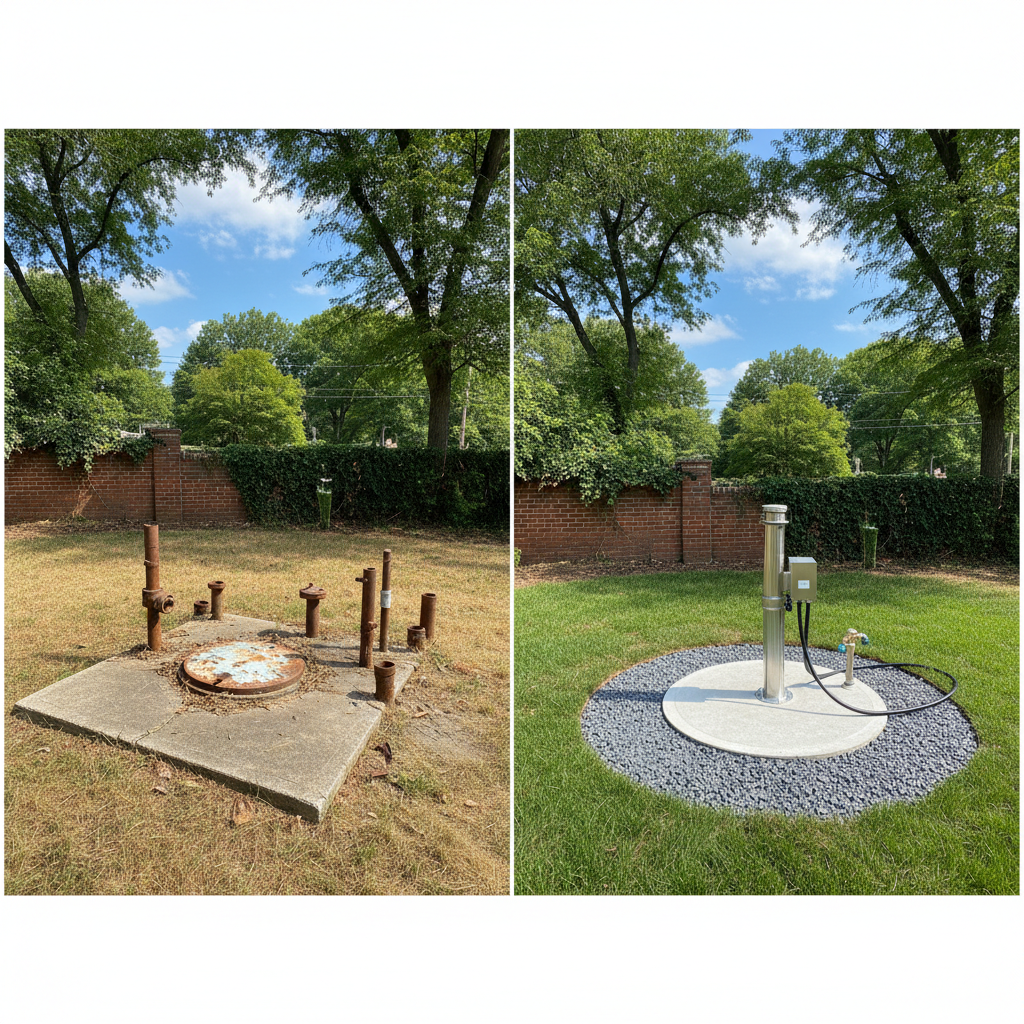
So, you're thinking about putting in a well on your property right here in Washington, DC. Good call, really. Whether you need it for irrigation, geothermal heating and cooling, or even just to supplement your household water, a well can be a fantastic asset. But when it comes to actually building that well, you’re generally looking at two main ways to do it: a fully cased well or an open-hole completion. I've seen both kinds installed all over the DMV — from the rocky spots in Northwest to the softer ground near the Anacostia. Each one has its place. Let's dig into what each means for you.
What's a Fully Cased Well?
A fully cased well is pretty much exactly what it sounds like. We drill a hole, then we put in a solid pipe, which we call casing. This casing runs from the ground surface all the way down to the bottom of the well. Think of it as a protective sleeve; it keeps the well bore stable and stops any loose soil, rock, or even contaminants from getting into the well from the sides. Down at the bottom, where the water-bearing rock or aquifer is, we'll either use a screen section or make perforations in the casing. This lets water flow in but keeps sediment out. The space between the casing and the drilled hole — that's the annulus — usually gets filled with a cement grout or bentonite clay. This seals it off, especially near the surface, which is crucial for protecting your water quality.
Pros of Fully Cased Wells:
- Top-Notch Protection: This is the big one, no doubt. The casing and grout do an excellent job of protecting against surface contamination, preventing unstable ground from caving in, and even blocking stray groundwater from shallower, less-than-ideal aquifers. Super important in urban spots like DC, where you might find old infrastructure or all sorts of soil conditions.
- Lasts a Long Time: Since the well bore is so well protected, these wells tend to be really durable. They can easily last for decades if you take care of them.
- Easier to Maintain: It’s usually simpler to clean, repair, or service a fully cased well. Why? Because the bore stays stable and clearly defined.
- Consistent Water Quality: With that good seal, you’re much more likely to get steady water quality from the aquifer you're aiming for.
Cons of Fully Cased Wells:
- Costs More Upfront: All that casing, screening, and grouting adds up. You’re paying for the materials, of course, and the extra time it takes to install everything.
- Slightly Smaller Diameter: The inside diameter of your well is limited by the casing. This can sometimes affect which pump you can pick or how much water you can get if you need a really high volume.
What's an Open-Hole Well?
An open-hole well works a little differently. With this method, we drill through the overburden — that's the soil and loose stuff near the surface — and install casing down to the top of the solid bedrock. From that point on, we just keep drilling into the bedrock without putting in any more casing. The bedrock itself forms the walls of the well bore. Water flows directly into the open rock formation at the bottom. We still typically grout the upper casing to seal off surface water, but below the bedrock, it's just rock. Simple as that.
Pros of Open-Hole Wells:
- Lower Upfront Cost: Less casing means fewer materials and often less installation time. That usually translates into savings for you.
- Larger Effective Diameter: Since there's no casing in the bedrock section, the entire drilled diameter is open for water flow. This can be a real plus in certain geological formations.
- Simpler Installation in Stable Rock: If you happen to be in an area with really solid, stable bedrock, it can be a pretty straightforward process.
Cons of Open-Hole Wells:
- Can Collapse: While DC's bedrock is generally stable, you can find fractures or softer zones. Over time, these can break down, causing parts of the well to collapse or slough off. This can damage pumps or slow down water flow.
- Risk of Cross-Contamination: Without casing, water can enter the well from any crack or permeable spot in the bedrock. If there are shallower, less-than-ideal water sources in the rock, they could mix with your primary aquifer.
- Harder to Maintain: If the well bore gets unstable or sediment piles up, cleaning or fixing an open-hole section can be much tougher. Sometimes, it's impossible without drilling a whole new well.
- Less Predictable Water Quality: Because water can come in from multiple spots in the bedrock, your water quality might not be as consistent.
Which One Should You Choose for Your DC Property?
For homeowners in Washington, DC, I almost always suggest a fully cased well. Here's my reasoning:
- DC's Geology Varies: Sure, we have some solid bedrock, but it's not perfectly uniform everywhere. You might hit fractured zones, softer shales, or areas where water flows differently. A fully cased well gives you that essential stability and protection against all those variables.
- Urban Environment: We're in a city, after all. There's just more going on underground — old pipes, buried debris, different fill materials, and potential runoff. The strong seal of a fully cased well offers a much higher level of protection against surface contaminants making their way into your water supply.
- Long-Term Value: Yes, the initial cost is higher. But the durability, reliability, and lower risk of expensive repairs down the road make a fully cased well a better investment for most DC homeowners. You really don't want to be dealing with a collapsed well bore in five or ten years just because you tried to save a few thousand bucks upfront.
- Peace of Mind: Knowing your well is built to the highest standards, protecting your water quality and your pump, well, that's just invaluable.
Now, there are a few very specific situations where an open-hole completion might be an option. Usually, that's in really remote areas with exceptionally stable, uniform geology and no chance of surface contamination. But for the typical residential property in a neighborhood like Shepherd Park or Capitol Hill, you're going to want the security a fully cased well provides. Trust me on this one.
When Charis Well Drilling comes out to your property, we'll do a thorough site assessment and talk through all your options. We'll always recommend what we believe is the most reliable and safest solution for your specific needs and the local conditions. So, don't hesitate to give us a call to chat about your project.